Even the best control tower is incomplete if it's cut off from the field. Delivery doesn't happen in the warehouse — it happens on the road and at the door. However well the team at the center plans, that plan loses most of its value if it doesn't reach the driver in real time. The mobile driver app is the bridge connecting every step in the field to the center — and it's the most underrated part of a modern TMS.
What a driver app actually does
A good driver app isn't just a map; it runs the entire field workflow:
- Live tracking and routing: The driver sees the auto-optimized route and delivery sequence in the app; changes land on the screen instantly.
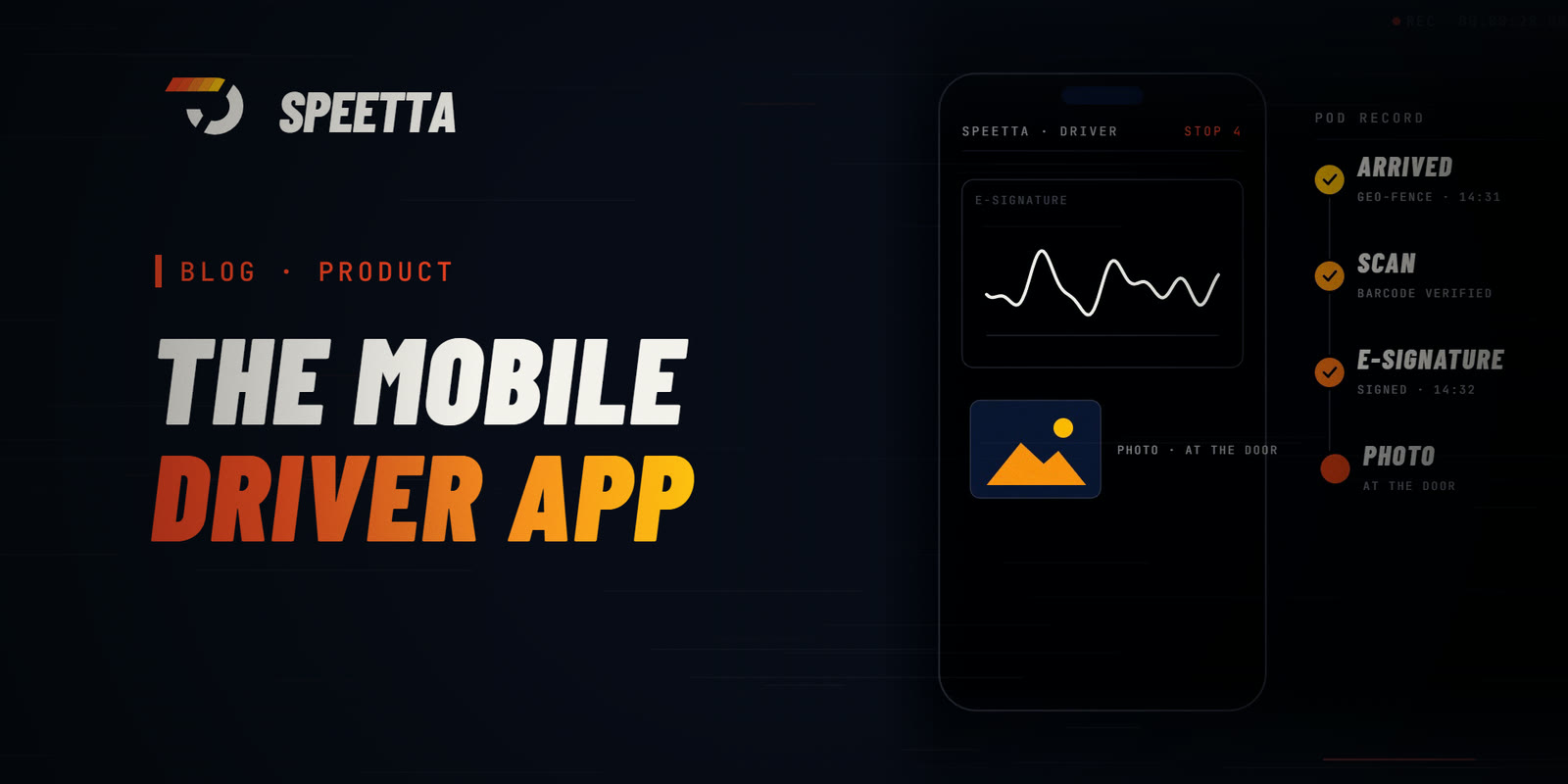
- Digital proof of delivery: Barcode scan, e-signature and photo confirm every delivery on the spot and record it centrally.
- Instant notification: Status changes reach the customer and center simultaneously; no one chases information by phone.
- Offline mode: Work continues with manual status updates in no-coverage areas, syncing automatically once a connection returns.
- WMS sync: Orders match the warehouse management system in real time, lowering the risk of the wrong parcel.
The real impact of moving from paper to mobile
Paper manifests and phone coordination mean lost receipts, wrong deliveries and hours of reconciliation. At the end of the day, accounting tries to match crumpled paper the driver brings back against the system — a workload that's entirely invisible but entirely real.
The mobile app removes that friction: data is born in the field, flows to the center instantly, and is never re-entered by hand. The compound effect is large. Deliveries per driver per day rise (less waiting, better routing). The error rate drops (barcode verification catches the wrong parcel). And reconciliation time falls to nearly zero (every delivery is already recorded digitally).
Why is offline mode critical?
Reality in the field differs from what the office assumes: rural areas, underground car parks, signal gaps. An app that works only online can become useless at exactly the moment of delivery. A well-designed driver app works offline — the driver records the delivery, captures the signature, takes the photo; it all syncs automatically once a connection returns. That's the difference between a system that "works everywhere" and one that "works most places," and in the field that difference is everything.
Driver experience is an operational metric
An often-missed truth: whether drivers like the app is an operational advantage. A complex, slow app pushes drivers back to old habits (phone, paper), and the system's data stays incomplete. A simple, fast, one-handed app raises adoption — and a system is only as valuable as it is used. That's why driver experience isn't a "nice to have" but a factor that determines the completeness of your data.
A system that can't see the field guesses at delivery. The mobile app turns the guess into fact.
The app also protects the driver
Adoption discussions usually frame the app as something the company imposes on drivers. The stronger framing is the opposite: a good app protects the driver. A timestamped, geo-located delivery record is the driver's evidence too — when a customer falsely claims non-delivery, the driver isn't caught in a he-said-she-said dispute; the proof is in the system. Optimized routing means less time lost to backtracking and dead ends, which for a driver measured by deliveries is directly in their interest. And a clear digital sequence removes the low-grade stress of juggling paper and phone calls while driving. When drivers understand the app works for them and not just on them, adoption stops being a battle. That reframing — from surveillance tool to support tool — is often the difference between a pilot that spreads and one that stalls.
The compound effect on a single day
To see the real impact, follow one driver through one day. In the morning, the optimized route is already on the screen — no depot briefing, no paper to sort. Each stop is confirmed with a one-tap scan, so the center sees progress in real time and can answer any customer instantly. A same-day order arrives at 11 a.m.; instead of a phone call and a manual re-plan, it simply appears in the driver's sequence, slotted where it costs the least. At the last stop, a photo and signature close the delivery, and reconciliation is already done. Nothing here is dramatic on its own — but multiplied across every driver, every day, this is where "deliveries per driver" quietly rises and "hours spent reconciling" quietly falls. The mobile app's value isn't a single feature; it's the removal of friction from every step.
Where to start?
Start with a pilot driver group and measure a single metric: deliveries per driver per day. Test the app in the real field — in coverage gaps, at peak hours, with different driver profiles. Get feedback from drivers; an app that isn't adopted is a failure no matter how powerful. See Speetta's driver app and how it talks to the control tower in a demo.